Rabu, 19 September 2012
Cycling Supertraining
I’m in the midst of training for fall climbing objectives yet, at the same time, must look ahead to how to improve my cycling fitness for the Nepal race in March. It’s important to look ahead because the further from an event you begin to train the more you can focus on power, which is, by far, how you can make the biggest improvements. Today’s post takes a look at an article on speed training for cyclists.
Paul Rogers’ Aussie athletes dominated the Athens Olympics. This article talks about the training techniques he used, and also addresses why it’s not commonplace in the sport. There are great lessons here that, clearly, aren’t for everyone. Rogers’ approach is highly disciplined, hard to follow, and not the most time efficient for a weekend warrior like myself but I’m still going to try and incorporate it into my prep for Nepal.
The first thing I should address is why an endurance athlete should do power work. After all, if your goal is to race hundreds of miles through the Himalaya shouldn’t you be focusing on endurance? Not exactly.
Power is muscular efficiency and translates directly to speed and explosiveness. Training it teaches your muscles how to do more work at the same size/weight. At the end of any physical encounter, assuming skill levels are matched, the one with the biggest power reserves always wins. It’s the most important athletic factor there is, even for endurance athletes.
Endurance is fairly easy to train and gains come quickly. Power is harder to train and it takes a long time. Most endurance athletes don’t train power because they race too much and don’t have time to fit it into their schedules because it should be (must be, really) trained separately from your other physical systems.
Volume is a speed killer. It doesn't matter what you do, if you do a lot, it will make you slower. The protein in your muscles (myosin heavy chain isoforms for those who know their molecular biology) will change to a slower, more endurance friendly type if you do too much volume.
Essentially, power needs to be trained separately and mostly alone. This will cause your endurance factors to suffer and you have to be okay with this. It’s harder than it sounds because most of us train like addicts afraid to lose any gains we’ve made. Endurance comes back quickly but you have to be patient and believe. You also must be willing to train differently than you might be used to, especially in the gym. For example,
If all you do is slow, heavy. You get STRONG and SLOW. You need to do most of your work at race speeds using submaximal loads but at high speeds.
unilateral is king. "single-leg press is our bread and butter"
The other issue for power training is patience. Again, we endurance athletes tend to be workout junkies. You’ve likely heard me say many times that training is only as effective as your recovery or that “you only get stronger at rest”. This is amplified when you train power because you often can’t feel it during the training. Performance is your only barometer. You don’t get pumped. Your muscles don’t burn. All of the things we associate with “hard training” come from endurance factors. Yet power is, by far, the most stressful on the body and forces the biggest adaptations to occur. So you have to be smart, and patient, or you will get hurt.
The one thing we do that most coaches can't cop is this. If you don't make the target times or loads on the first effort or set, you warm down and go home. You aren't fresh enough to train at a level that will make you improve. If you do a PB (personal best), you warm down and go home. If you are on fire that much you can blow yourself to pieces in a couple of sets or efforts and it will take weeks to dig you out of the hole you put yourself in, so whatever it is, if you PB, you stop and come back next time.
All that said, power training is addictive. Most of my close friends value it more than anything else because, frankly, it’s rad. Especially once you understand it. It’s pure performance, the opposite of enduring. But it’s every bit as demanding and takes much more discipline than any other form of training because every workout puts you at risk of being injured since 100% muscular efficiency is the goal and at 101% you are injured.
I haven’t done a proper power cycle in ages. This is the year. I’ll be following many of Rogers’ principles combined with what I’ve learned at P3 (you can get a taste of this in P90X2)—a new training protocol to put on trial. The rat is heading back into the lab.
Sabtu, 15 September 2012
Unbreakable
This week’s Psyche follows last week’s theme on toughness. I need to get tougher right now and not many things we do for “fun” is tougher than ultra running. Maybe off-width climbing, and alpinism, and a few more esoteric pursuits like birthday challenges, but ultra runners are up there on the sufferability scale. One of my friends summed up the average person’s view of this tribe when he heard I was dating one once upon a time. “You’re with someone who seeks out suffering to the point of hallucinating, for fun! Good luck with that.”
Today vid is a preview for the film Unbreakable, which is about the Western States 100. If you’re captivated buy the movie (click here). It won’t disappoint. Ultras were for the longest time both small and strange. Its participants were so un-modern-world that until very recently Ultra Runner magazine was a black and white cut and paste publication that looked like something from the 70s. One of the perks of its newfound trendiness (races are now very hard to get in to, imagine!) is stuff like production value. This is an excellent film, made even better because they happened to record one of the more exciting races I’ve witnessed. Now I’d better go do some suffering of my own…
Kamis, 13 September 2012
Great Advice For Climbers, Or Anyone, Really
“Stevie Haston is rad,” said Elijah on a recent post that linked to his blog. I concur. And while I’ve linked to things he’s written quite a few times I’ve never had a post of his to completely focus on. Today's the day, as he’s offered some top-notch advice for climbers that transcends the sport into great advice for everyone.
So who is this guy and why should you pay attention to him? Because he's in his mid 50s who still climbs harder than 99% of the world. He also does other assorted adventures that most mortals wouldn’t consider, noted by the casual reference to an injury he picked up during a 200-mile run. His blog offers insight into all sorts of things, but mainly training. I can't recall ever spending any time on it where I didn't learn something about something. Plus he’s funny, which for me is reason enough alone to have his blog pegged atop my reading list.
This post, called Making Monsters, is some advice on how not to get injured that includes an exercise I’ve never done (part of it anyway), which is saying something. Click on the excerpt below to read the article and enjoy Haston’s unique style of prose:
Making monsters is what its about, but in the end monsters devour themselves, or just rip themselves apart. I did it just over a year ago running in a 200 mile run, half way I slightly tore a calf, but of course I continued for a while and made it much worse. In climbing you don't have the luxury of even time to consider, it happens very quick. Above is standing or upright row, its very good for shoulders, you really need to watch your self in a mirror to watch for imbalances! My shoulders are good again, because I sorted them out.
Selasa, 11 September 2012
3 Simple Steps To Weight Loss In 3 Weeks
We love to make dieting complicated but the reality is the 95% of the obesity epidemic can be blamed on one thing: we eat a lot of junk. You’d never figure this out looking at the diet section of your local bookstore, though, where it seems like everyone on the planet has a different opinion on why we’re fat and thinks you need to read 300 pages and redesign your beliefs and lifestyle in order to eat healthy. Truth is, eating ain’t that complicated. So today I present three steps that will lead to weight loss if you follow them with common sense.
First a little background. The three steps are presented in my latest article, Fit For Fall in 4 Weeks over at DPM Climbing, along with some training for climbing. The plan is a simplification to one of my early articles for Beachbody in 2001 that has been revamped many times and was also the basis for the nutrition plan for Yoga Booty Ballet. It’s essentially a less OCD version of all of Beachbody’s diet plans that leads you to the same outcome, eating natural foods and minimal junk.
This isn’t a knock on all those books or other nutrition plans. Most can be helpful. One might be exactly what you’re looking for, since there are as many ways to eat healthy as there are personalities. I’m all for reading about nutrition, especially since I write about it for a living. I’ve written thousands of pages about it. Reading them all will certainly help you learn (in the mood, start here). But since many of you have other interests in life my goal is always to keep things as simple. For those of you disinterred in become nutrition experts here are three simple steps to weight loss.
Step 1 – Drink water
Drink a gallon of water a day for a week. Plain water only. We spend most of our lives chronically dehydrated, which does two big things leading to us getting fat. First, it makes you hungry when you’re actually thirsty. Second, it causes your body to retain water, making you heavier. There are a lot of other unhealthy things associated with this condition but today we’re sticking to the basics so this is all you need to know. The best way to stop retaining water is to drink water. Lots of it. The obesity trend began with the rise of soda as our de facto beverage. Soda is the worst food in the world. Drink water, not soda, and you will be smaller.
Step 2 – Cut out junk food
Cut out junk for a week. Okay, here’s the rub. We eat junk—a lot of junk. Most restaurants are junk. Fast food is junk. Most of the aisles at your supermarket are filled with junk. “How do I even know what junk is?” is a common excuse. But you do know, don’t you? When you chose fries over a salad you chose junk. The cookies your friend brought to the office, junk. KFC on the way home because you were in a hurry, junk. Big Gulp to take the edge of the heat, et al. You know.
I wrote this dismissal of the USDA’s food pyramid because the pyramid-now-plate ignores what’s wrong with how we eat. We don’t really need to nitpick carbs and fats and proteins. We certainly don’t need to bicker over what kinds of fruits are healthy. We’re fat because the stuff we live on isn’t on the USDA’s pyramid, or plate, at all. Eat meat from animals and plants from the ground. Avoid foods with words you can’t pronounce, drive through restaurants, and shopping at the gas station.
Overeating real food is actually pretty hard because you’re getting fiber and nutrients and your body sends signals to your brain that it’s full. Junk, devoid of nutrients and stuffed with calories, does the opposite. You’re always hungry because you’re lacking nutrients even though you’re eating way more calories than your body can burn. Simply cutting out junk will fix your issues most of the time.
Step 3 – Have liquid breakfast and lunches
Finally we address habits. Not only do we eat junk but we eat too much. In the land of “all-you-can-eat” we’ve lost touch with reality. For one week have a juice or smoothie for breakfast and lunch and then eat a normal dinner. The catch is that the above rules are still in play. You’re drinking loads of water and you can’t have junk.
This is a version of something we do at Beachbody called the Shakeology Cleanse, though I’m making it less strict. You can put anything you want into your smoothies (or juices if you have a juicer) as long as it isn’t junk. This means that you’ll likely start with a protein or meal replacement base and then add fruits, veggies, and maybe seeds. You can’t add sugar, or ice cream, or Skippy (read labels). Dinner isn’t regulated, so you can fill yourself up, but with the no junk rule in effect you’ll likely stop eating when you’re no longer hungry.
The trick in all of this-—if you want to call it that—-is to learn a lesson about your body’s relationship with food. Food is fuel. It’s there to help our bodies work better. Eating well improves your performance, which is something society has forgotten. Instead, we tend to eat because we’re bored, or depressed, or happy. We’ve turned it into a crutch instead of a tool. Yes, eating is fun. It can, and should be, rewarding. But the reward should be for a life well lived. And we live a lot better when our bodies function like they’re supposed to.
Senin, 10 September 2012
P90X Makes Good
AP
Huge props to P90Xer David Akers for tying the NFL field goal record yesterday at 63 yards! Akers was one of the first professional athletes to claim that P90X improved his game. Five years later he’s transformed from a guy near the end of his career to knocking on the door at the Hall of Fame.
He began doing P90X, at age 32, when he felt he was losing his leg strength after going 2 for 10 from beyond 40 yards in one season. The following season he had his best year and has been improving ever since. Now, at 37 if my calculations are correct-—at an age when power is genetically on a steep decline—-he sets an NFL record for power. Maybe somebody ought to send a note to this guy for claiming P90X lacks strength training.
The lesson for today’s Monday Psyche: do P90X. You’ll age better.
Sabtu, 08 September 2012
Are you Tough?
Last weekend I humped a load of bolting and climbing gear up to one of the cliffs I’m prepping for my birthday challenge. It was hell, reminding me of how soft I’ve become as a working stiff. I need to get my toughness back and, since it’s mainly mental, I’m searching for Pscyhe.
Mind you, I’m reasonably fit. I just managed to finish “the hardest” 100-mile mountain biking races (2nd in class, apparently--shocked by a medal that showed up this week) and am less than a year out from competing at a world championships. But fit and tough aren’t the same thing and climbing, particularly first ascenting, requires a lot of toughness.
Traipsing around in the mountains with a massive pack and spending hours mimicking a construction worker hanging upside down was once a daily activity for me. I’d taken for it granted because I was used to it. But it is hard; both physically and mentally. You’ve got to want to do it. Otherwise it’s too easy to leave it to others.
And nothing—nothing!—I’ve ever done encapsulates the last two lines like offwidth climbing. It’s such an amazingly-miserable endeavor that one pitch of it on a 3,000’ wall will often have climbers searching for a different line. The number of climbers who seek out offwidths is so small that they’re pretty much all close-knit friends. It defines the word tough. For this week’s Psyche I present offwidth climber Pamela Shanti Pack. You’re about to see what I mean. Get inspired. You too can do hard things.
Kamis, 06 September 2012
Climbing Fitness in 4 Weeks
My latest training article for DPM hit the shelves this week. It can also be found on their web site by clicking here. This is a follow-up post, to add both some detail and personal perspective on why this protocol was chosen and how you might alter it.
I am this article’s target audience as it’s almost identical to what I’ll be doing for training this month. It wasn’t my plan when I wrote it but life got busy and I now find myself lacking climbing fitness as summer wanes. Sending temps are coming and, when pressed for time, hangboarding is by far the best bang for your buck to improve quickly.
History
Hangboarding is boring. It takes mental toughness. For inspiration, here are some personal anecdotes on how much it can help you:
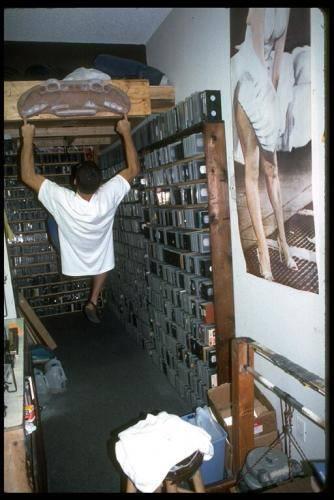
In 1990 I had a fledging business that didn’t allow me to go climbing at all, forcing all of my training around a board in my shop. A serendipitous meeting with a Swiss exchange student, who showed me techniques far in advance of what came with the Metolius Simulator (the only board on the market back then), led to a two month training cycle that transformed me from a 5.10 to 5.12 climber.
life at the @#$%! video shop
In the md-90s one of our friends followed his girlfriend to grad school. A shy lad, he didn’t bother trying to meet climbing partners. Instead he hung Yaniro Board in their apartment and started entering all the national competitions. Out of nowhere, he always finished near the top. This is a guy who’d only redpointed a few 5.12s, did very little actual climbing, and was suddenly beating guys you’d read about in every issue of Climbing. He simply became so strong that he could hang onto basically anything.
elijah demonstrating a move where technique will not help you but hangboard training will
Last year, what’s left of the old Santa Barbara crew, Phil and Elijah, lost their climbing gym, The Shed, a state-of-the art training facility. They bought a Beastmaker, a Moon Board, and hung them in a garage. Turns out a gym full of equipment was mainly keeping their focus from where it should have been all along. Both had the best climbing season of their lives.
phil shows stuff you can do in your mid-40s if you hangboard train
Another of our crew, Micah, used a hangboard because he had ankle reconstruction and couldn’t walk. Before he could even go on a proper hike he ended up redpointing the hardest route of his life.
micah shows stuff you can do when you can't walk if you hangboard train
There are plenty of stories like this. Check out the Anderson brothers, Sonnie Trotter, or the guys over at Beastmaker. As Ben Moon once said, “technique is no substitute for power.”
There are many ways to train effectively for climbing. Almost all of them have some amount of merit that vary in effectiveness due to the individual. Like I state in the article, if you don’t know how to climb there are better ways to spend your time. But when all is said and done, the ability to hang onto holds and not let go is always going to be the single most effective way to raise your level.
Variables
The routine I wrote for DPM is just one option that has worked very well for me. As a multi-sport athlete I’m always in and out of climbing shape. This is the best plan I’ve found for getting back into shape quick, without spending much time (I work a lot). Following the links in this post will give you other ideas. All of them are good. Training should always have an individual element to it. Find what works for you.
The lock-off hangs are very stressful. Proceed carefully. They are a suggested protocol. If you aren’t strong enough and need to alter them your training will not suffer. Do them when you’re ready.
Training is only as effective as your ability to recover. The article's schedule is a suggestion. Tony Yaniro once wrote an article stating that he never decided if he was going to train until he warmed up. If he felt strong he trained. If he didn’t he rested. This can be tricky to gauge but climbing is a tricky, subtle, sport where you put an excessive amount of stress on very small muscles and connective tissues. Listen, astutely, to your body. Hangboard training is generally safer than most forms of training because movement is controlled. Still, it’s easy to get hurt training for climbing no matter what you do. Remember Stevie Haston’s first three rules and live by them.
haston showing stuff you can do in your mid-50s if you hangboard train
Diet
The article presents a few tricks I use to lose weight. I dig a little more into the thought and history behind them next week. For now, drink water. A lot of water. It both keeps your connective tissues strong and helps you lose weight (note the scribbling on stevie's board). And nothing, not even a hangboard, can improve your strength to weight ratio as much as shedding some pounds.
pic at top, tommy caldwell. want to climb massive virtually holdless granite slabs thought to be impossible? hangboard train.
Langganan:
Postingan (Atom)