Selasa, 16 Agustus 2011
Non-Race Report
After crashing hard on a ride Sunday it now seems official that my only races this year will a state championship, national championship, and world championship. I guess if you’re going to race you might as well go big. I will also add that this is not the best way to prepare for racing, especially if you’ve any interest in your results.
It wasn’t meant to be like this. At the beginning of the year my calendar was filled with preparatory races. Duathlons are scarce in my part of the world but I travel a fair amount so it didn’t seem like such a task to run into a few here and there. However, my work and race schedule’s never synched up and the closest I found myself to a duathlon on any given weekend was a nine hour drive. I’d also circled some tris, runs, and bike races to do and none of them worked out either.
Other than Duathlon Nationals, which I had to do in order to qualify for Worlds, the only race I made it to was our mountain biking state championships. This had nothing whatsoever to do with prepping for multi-sports. I only entered this race so I could qualify for nationals, visit my friend Rebecca, and ride all the trails she’s always going on about. I did manage to qualify, traveled to Ketchum for the event, which leads to this installment of the non-race report.
biketown.
The non-race report requires some back story. Cycling and triathlon teams have tradition where the best placed rider on the team writes up a race report and submits it to the team mailing list. During the end of my race-every-weekend stint as a road racer, when I missed a long stretch of races for strange, amusing, and downright lazy reasons, I submitted a “non-race report” that seemed to entertain the lads as well help them not feel bad about calling early on a race morning to make sure I’d show up.
reed on a night where we probably weren't making the races in the morning.
Most of these tales included my friend Reed. We were on the same team we lived an hour apart. This meant that it generally made sense to stay at whomever’s house was closest to the next day’s race. And this led to a series of last-minute decisions about things to do that might be more fun than riding our bikes in circles as fast as we could. These might include an epic road ride, a long climb we’d been wanting to tick off our list, a casual group ride that was supposed to be attended by cute girls, mountain biking, rock climbing, or simply a long night of drinking and socializing leading to us wanting more sleep. The first few excuses were legit but, after a while, we decided that it really was more fun to just ride our bikes on our own time than it was to race. I haven't raced much since.
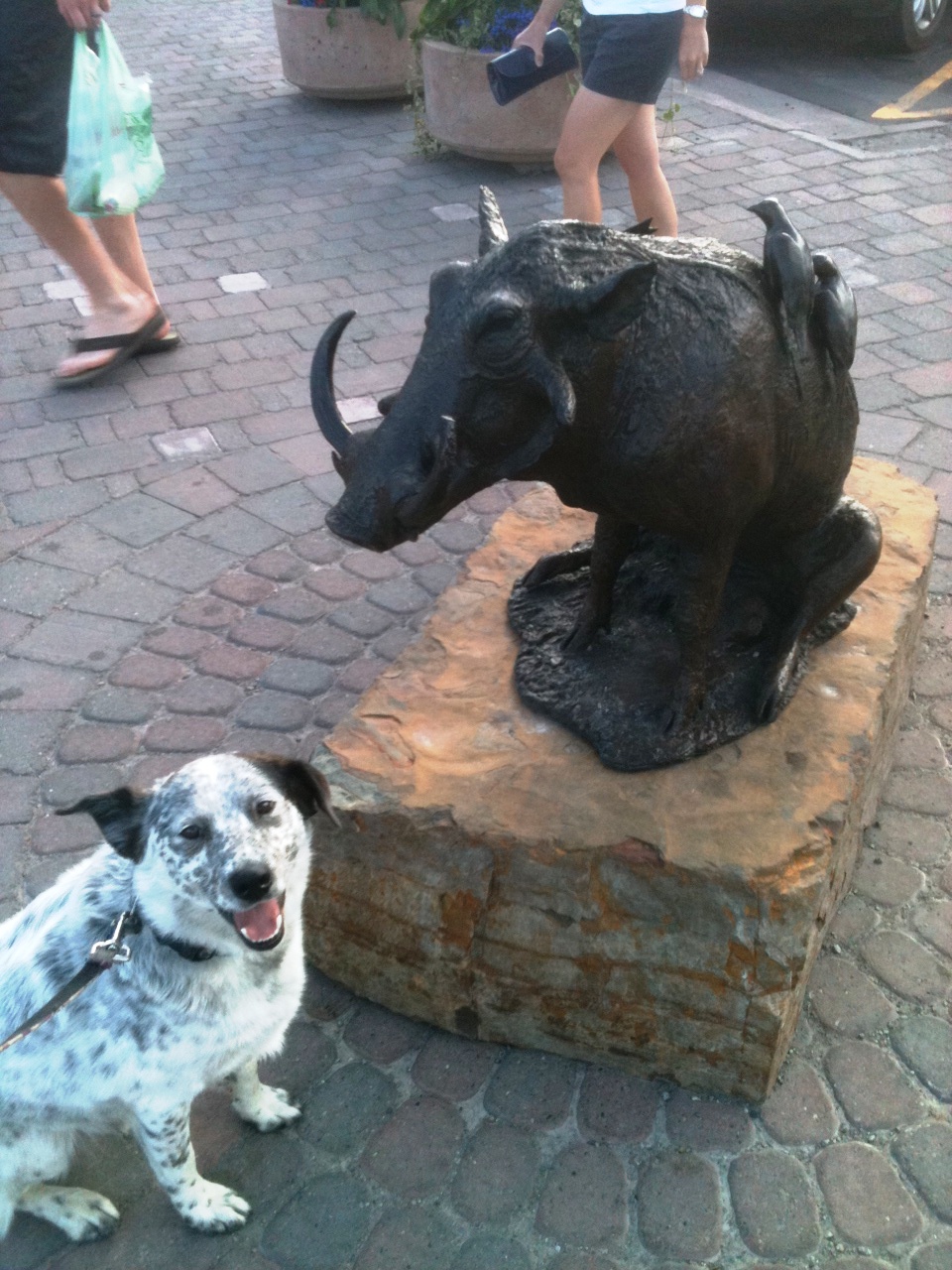
who looks like a pig?
yep, biketown.
So I’m in Ketchum, a few days before Nats, and not exactly tapering. In fact I’m trying to ride as many of the classic local rides as possible before the short holiday is over. I’ve got two races on the schedule, neither of which I care too much about. The morning of the first race I head out early to pre-ride the course, and crash. Hard.
reba got this call while we were at breakfast. it's mountain biking. sometimes you crash. at least my crash didn't turn out like this.
It’s a stupid crash because it’s on a part of the course that I’d already determined to run because Rebecca told me it would be much faster. But I’m going slow and warming up and just want to see if I can clear the obstacles. I don’t preview anything and one second I’m hopping over a tree and the next I’m doing cartwheels down a mountain side. I’m shocked, because it looked rather innocuous, but if I’d bothered to glance at it beforehand I would have seen a root shooting out from the back of the tree that was like a small ramp leading off of the trail. I’m pretty bloodied but everything seems to be working so I ride the rest of the course and then head to breakfast. The next morning one hand would be too swollen to grab my brakes—and is still bothering me a month later—but that’s an aside.
A little later, Finnegan and I begin a nice long and slow warm-up for the race. Norba (now USA Cycling) races are short (usually 10-20 miles) and ridiculously fast out of the gate. They are hard to warm-up for because the first few minutes are absolutely full gas. Since I often settle in about hour three (too much enduro stuff over the last decade) I decide to warm-up for an hour and a half; riding aerobic for most of it and putting in a few hard efforts to “open the pipes,” as cyclists say. This also doubles as a workout for Finn and allows me to preview another classic trail.
At some point along this trail thoughts of the long-forgotten non-race report start to trickle into my head. The trail is great. It’s empty. We’re surrounded with quiet, just a few mountain sounds, and jillion-dollar views. I hit the end of my warm-up and sit down to have a snack. I can faintly make out the race announcer, far below, and picture the mayhem of 100 guys all redlining to be first into a dusty stretch of singletrack. I look in the other direction, where empty trail stretches forever into a mountain range I’ve yet to visit. Finnegan has never looked happier. I ask his advice. Needless to say, the non-race report is alive and well.
at this point there's only one rational decision that can be made.
Jumat, 12 Agustus 2011
Meeting the Tarahumara
This week’s psyche post is from Micah True (aka Caballo Blanco), who was made famous by the book Born to Run. This is the true story—as opposed to the hyperbole-ized book version—of how he met the Raramuri people of Mexico who he’s been intricately linked with ever since. It’s a great read that will motivate you to get out on the trails even if you aren’t a runner. Click on the excerpt to read the rest:
"Well, shucks; I really want to run this race, and am an old time, loyal friend of this event; won't you let me enter?" I had pleaded with the race director, who did not even remember my name, or who I was, even though I had run the "family'' like race four times. No chance; the race had grown big now, and entry was at a premium. The "New York Times" and many publications had written the story of the 55 year old Mexican winning the race. Leadville was now a huge spot on the ultra-running map! The race and their corporate sponsor, a shoe company, had benefited considerably from all of the publicity, the feel good story of the impoverished Indians running for their communities; and not JUST running, but winning; and a 55 year old in sandals at that! A deal was made with the 'gringo' promoter who had driven the Tarahumara north, to bring another team of seven Raramuri to the '94 race. I think that part of the deal was to wear the race-sponsor's shoes for a photo op.
I received a phone call from the gringo sponsor/promoter of the team of Raramuri. He was looking for help, someone who could run and knew the course, to pace some of "his" runners. "Sure, I'll do it, providing I can run the whole 50 mile return with the runner of my choice." "They tend to run faster as they go; you think you can keep up?" he challenged. "If I can't keep up, then they don't need me," I confirmed...
CB and his dog, Guadajuko, and at the start of the race he organizes each year, The Copper Canyon Ultramarathon.
Kamis, 11 Agustus 2011
How To Treat (and Avoid) Plantar Fasciitis
Here’s a decent little video on what plantar fasciitis is and how to treat it in its acute phase. What it doesn’t cover is how to get rid of it or, better yet, prepare your body so that you don’t get it in the first place. Once you get it there’s no way around a fairly lengthy rehab process and it’s not all that hard to avoid. Here are a few exercises that, when done regularly, will greatly reduce the chance of you getting plantar fasciitis. When you have it, these are also your go-to movements.
A,B,Cs: I hate it when doctors prescribe this exercise as a treatment for foot injuries. Not because it’s bad but because once you have foot issues you must get more aggressive with your rehab and this tends to get prescribed the most only because it’s simple. All you do is draw the alphabet with your feet in the morning before getting out of bed. If I’m spending a lot of time on my feet—like when I’m running ultras—I’ll do the alphabet both forward and backwards, slowly. It’s a great warm-up for your feet prior to getting out of bed.
In and outs: While A,B,Cs are a great warm-up, you need to strengthen all the muscles of your foot and ankel so that it doesn’t collapse, which is probably how you got PF in the first place. This exercise can be done anytime and anywhere. Sit with your legs parallel about two fist widths apart, feet flat. Rotate your toes inward as far as they can go, forcing your weight onto the outside of your foot. Now rotate out as far as you can go, forcing weight onto the inside of your foot. Do 50 reps daily until this is easy. Then you only need to do it once in a while to ensure you haven’t lost your strength.
Towel Crunches: I use a hand towel (wash cloth). Sit as above with a small towel on the ground in from of you with the edge under your toes. Use your toes to crunch up the towel as small as you can get it. Then use your toes to flatten it back out. Do 25 if you can. If not, that is the benchmark of strength you are looking for.
Toe raises: Stand with your back flat against a wall, feet together, flat on the ground, out in front of you about a foot or so. Now raise your toes while keeping your back presses flat against the wall. This works the tibialis anterior muscle on the front of your leg, which helps balance flexor/extensor leg strength and will also keep you from getting shin splints. Do 50 a day until they feel easy, then do them once a week or so for maintenance.
Rabu, 10 Agustus 2011
26er vs 29er
If you’re one of those who still isn’t sure what size wheels to ride on the dirt you must check out this video. I’ve been a 29er convert since the first time I got a leg over one because it just felt right. I was never sure whether or not it made me faster but I was certain that it’s more comfortable and, hence, more fun. There’s no doubt you can feel some advantages with smaller wheels but you’re never really sure if it’s faster or just feels that way because you’re covering less ground on each revolution. In this video professional racer Christoph Sauser sorts it out once and for all.
the most definitive comparison in wheels size is best tested rigid, which will leave you wondering why anyone would ever bother making a 26 inch single speed.
Selasa, 09 Agustus 2011
A Realistic Training Template For a Busy World
I can’t believe that it’s only four weeks until I leave for Europe. The final phase of my training program has snuck up on me like a ninja in what’s been a chaotically busy summer. But that’s life as a recreational athlete. Every day doesn’t revolve around training. Training comes down to what I can fit in around everyday life. And this is the case for, like, 99% of the people I work with. And one of the major keys to success is getting them to adjust to the fact that their training schedule is a proposal, not game where one wrong turn means that you lose.
Last night I drew up my template for my final prep for Worlds. It’s a guideline for the volume, intensity, and amount of recovery I think I need to be ready for the race. But it’s only a logical proposal based on science. It’s not a daily schedule, even though it looks exactly like one. My realistic goal is to tick off what’s on the plan, and follow its structure, within the constraints of life. This means that my training log will probably look a lot different than what’s written here, but should yield the same results as long as I stick with the principles reflected in the schedule.
I’m writing this because rarely does a day go by when we don’t hear questions from customers who think that if they deviate from their workout schedule all of their hard effort will instantly disappear. We even stopped using suggested days on our schedules because we got so many “if I do Chest & Back on Tuesday instead of Monday will P90X still work?” type of questions.
Training is not magic. It’s not a game or a trick and there is no on and off switch. Our training schedules follow logic and are very important—as is the template I made last night—but only as a guideline. You need not follow the schedules to the letter to get results. You need to adhere to the principles to keep training hard enough, give yourself enough rest between similar workouts, and not over train and hit a plateau. Doing a Turbo Kick class at the gym instead of HIIT 20, a company softball game instead of Kenpo X, or going a little overboard at your friend’s wedding… it’s all just nitpicking. Success comes from training hard, seeing your program though to its end, then finding a new challenge to keep you moving.
The schedule here is my race-prep training only. Not listed is my mobility work (yoga, stretching—at least a short session daily), weight training (one PAP session per week for the next three weeks), prehab/rehab/core (2x/week), and climbing (Worlds are in Spain so climbing is definitely on the agenda—2-3 short sessions per week).
Jumat, 05 Agustus 2011
The Juice Movie: Psyche and Skepticism
This looks like a nice, inspiring film that will probably create a very minor juice fast craze. And that’s great. People should juice veggies at home. I do it all the time. I also hang out at a juice bar/coffee/bike shop so much that I could get mail there and no one would bat an eye (that incidentally bought their juicer from Whole Foods who now uses concentrates in their smoothies, so don’t buy them). The star seems like a funny guy, the show is filled with information that everyone should know, and I love the angle that it’s how you feel, not how you look, that ultimately matters. I’ll give it a thumb’s up based only on a preview. So where’s the skepticism?
I can see the excuses already. I can’t afford a juicer. I can’t juice fast with my job. All liquids but soda make me sick (an actual Message Board excuse), etc. The lesson many people are going to take away from this film is going to be that you must either juice fast or be fat. We are a country that, for some strange reason, sees the world in black and white terms. And nothing could be less black and white than nutrition because there are many different healthy ways to eat.
Somebody mentioned to me recently that Beachbody had a lot of different diet plans. While this is true, as each diet plan uses a slightly different psychological tool for motivation, all of our “different” plans end up doing the exact same thing; transition you away from junk food so that your diet consists mainly of whole natural foods. It’s all very simple and we have millions of success stories to show it works. You don’t need juice. You don’t need eat like a caveman, a French woman, Aphrodite or Dr. Phil. You don’t need to stay in a zone or pretend you live on The Riviera.
The only black and white thing about nutrition is the cause of the obesity epidemic. We eat too much crap. And we don’t exercise very much. If you change those two things you will stop being fat, you’ll get sick less, and you’ll feel good most of the time. The real solution is a lot simpler than even dumping veggies into a blender. Not that there’s anything wrong with that.
Rabu, 03 Agustus 2011
Why Overtraining Isn’t Always Over Training
If I ever lose my mind and decide to run for a public office would someone please remind me of this post. I’m a terribly inefficient socializer. Whenever I spend an inordinate amount of time in social settings I break down, even if my exercise patterns are minimized for the situation. Of course I could just adjust to this, becoming a glad-handing, canned answer man who can waltz through a day of baby kissing without it causing so much as a blip to my adrenal system. I just don’t see the upside to making that switch. I like being engaged in conversations. And I like my alone time. A lot. So remind me. Please. No politics.
The perils of schmoozing isn’t the point of this post. It’s to remind you that overtraining doesn’t necessarily mean that you are working out too hard. You could just be living too hard. Training effectiveness isn’t all about bringing it. It’s about balancing your training with your recovery, which takes into account diet, daily activity, and sleep. Lose any one part of this equation and risk becoming overtrained, even if all the exercise you’re doing is based on recovery.
This topic came up again and again in many various forms on last week’s Chairman’s Adventure in the south of France with Team Beachbody's top coaches. It was presented in the form of discussions on jet lag, post workout nutrition, pre-workout supplements, and the effects of alcohol on your workouts, and on and on. Each topic is worth its own post, which will be coming. Today, my jet-lagged foray back into public writing is only on the big picture perspective as exemplified by me.
I set up my training schedule to finish a hard block prior to leaving on this trip. The week-long biking adventure seemed like a perfect opportunity for some active recovery. In theory it would have been. A few hours a day of casually spinning through Provence is a text book performance recharge, especially knowing that you’ll be well fed. What wasn’t taken into account was sleeping poorly, late night wine tasting, lots of stimulating conversation, the motivation provided by a pace line, a few wrong turns leading to under-fueled hours on the bike, and Monaco’s 24hr lifestyle with Jon’s friends.
non-planned things that can lead to overtraining:
riding harder than you planned.
Dave Ward HAHAHAHA. It's just slightly more complex than that. I sat next to Steve Edwards for 2 hours on a bus ride. If that doesn't fill your head with blog/vlog posts I don't know what will.
engaging conversation
making a wrong turn after one of the world’s most iconic climbs, leading to 12k of climbing you didn't fuel for.
focusing all remaining mental energy on the wines of provence.
four hour explorations of the maritime alpes with only 16oz of water.
enjoying the sunset... til sunrise.
Since you can’t always tell if you’re overtrained I planned a little test; the same ride pre and post trip as a gauge. About an hour into my post-test I knew I’d over cooked the holiday. The punch I had before, even while training hard, was lacking. I’d have to shut things down and lose perhaps a week of World’s training. I was hit with further evidence later that night when I got a cold—the easiest to read overtraining meter there is.
After two days and lots of sleep things are feeling back to normal. I’m bummed to be missing out on the hard training that was on the schedule but keep reminding myself that 1% overtrained is worse than 25% undertrained, or so the saying goes. If that didn’t work I could fall back on how much fun the trip was because it’s always worth missing a few workouts for time well spent with good friends. Anyway, I always expect hurdles along any training program and so should you. Even professional athletes, who are paid to do nothing else, have a hard time keeping their planned schedules on track. And if pros have trouble you might, too. And this mindset will help so that when you hit life’s inevitable bump in the road you don't endo.
Langganan:
Postingan (Atom)


